



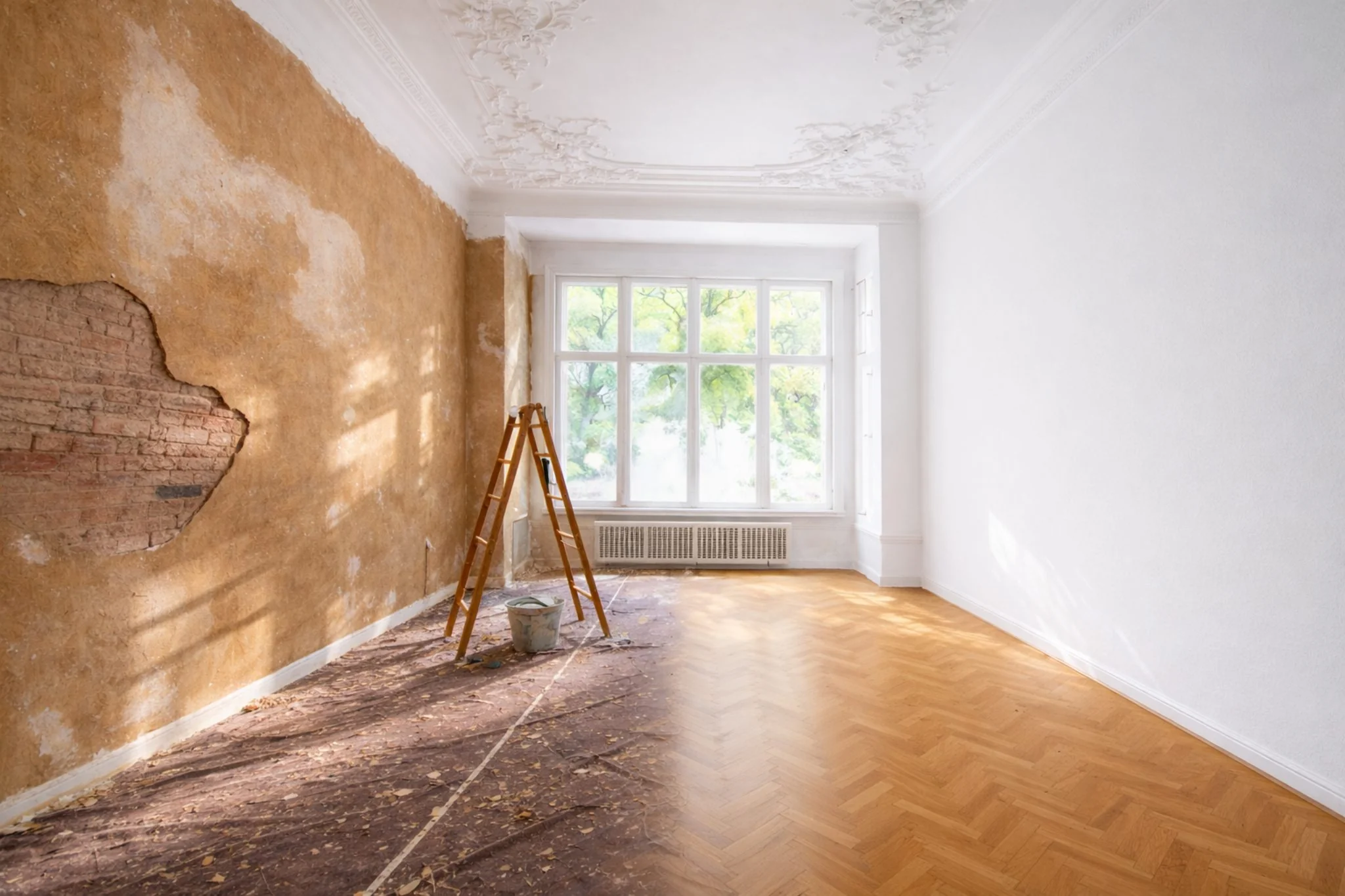
Managing a renovation remotely is one of the most common challenges faced by international property owners in Barcelona. The distance creates specific risks: decisions get delayed, progress is hard to verify, and small problems can escalate before anyone flags them.
This article outlines how to structure a remote renovation management approach that protects your investment and keeps the project on track — even when you are thousands of kilometres away.
Why remote renovations require a different approach
When you are physically present during a renovation, you can spot issues early, approve changes in real time, and maintain a direct relationship with the team on site. Remote management removes all of this, which means the structures that replace your physical presence must be explicit, documented, and reliable.
The most common problems in remotely managed renovations are:
- Slow decision-making due to time zones or unclear approval chains
- Verbal instructions that get misunderstood or forgotten
- Progress claims that cannot be independently verified
- Budget drift from undisclosed extras or scope changes
- Lack of accountability when issues arise
Each of these is preventable with the right structure in place before work begins.
The single most important principle: one accountable party
The most effective remote renovations operate with a single point of accountability on the ground. This is typically a dedicated project manager who:
- Coordinates all trades and suppliers
- Makes day-to-day decisions within a pre-agreed scope
- Escalates decisions that require owner approval
- Reports progress on a defined schedule
- Takes responsibility for quality, timeline, and budget compliance
Fragmented structures — where the architect, the builder, and the owner each manage different aspects independently — consistently underperform in remote contexts. If you are not present to hold the threads together, someone else must be.
Setting up the right communication framework
Communication during a remote renovation should be structured, not ad hoc. Before work begins, agree on:
- Reporting frequency: weekly written updates at minimum, with photo documentation of completed phases
- Decision log: a shared record of all decisions made, including who approved them and when
- Escalation protocol: which decisions can be made autonomously by the project manager, and which require owner sign-off
- Communication channel: one primary channel (email, a shared project tool, or video calls) rather than a mix of WhatsApp, phone, and email
Structured communication prevents the most common failure mode in remote renovations: important decisions made informally, undocumented, and later disputed.
Contracts and documentation
For remote renovations, formal documentation is not optional — it is the primary mechanism through which you exercise control.
Before construction starts, ensure you have:
- A signed contract with a clearly defined scope of works
- A detailed, itemised budget
- A payment schedule tied to verified milestones, not calendar dates
- A documented approval process for any changes to scope, materials, or cost
Any instruction or change agreed verbally should be confirmed in writing within 24 hours.
Milestone-based payments and financial control
Payment structure is one of the most effective tools available to a remote owner. Payments should only be released when:
- A defined phase of work is confirmed complete
- Photo or video documentation confirms the work
- The project manager has verified quality
Never pay ahead of progress. Pre-payment removes your primary lever for ensuring accountability.
What to delegate and what to retain
Remote management works best when you decide upfront what decisions you want to retain and what you are comfortable delegating.
Decisions to delegate to the project manager:
- Daily sequencing of trades
- Supplier scheduling and delivery coordination
- Minor on-site adjustments within approved specifications
Decisions to retain:
- Any change to agreed materials or finishes
- Any scope addition with budget impact above an agreed threshold
- Structural or layout changes not in the original project
A clearly written delegation matrix, agreed before work starts, prevents ambiguity and protects you from costly surprises.
Site visits: when and why
Even with excellent remote management, at least one site visit is strongly recommended for any significant renovation. The most useful timing is at the structural completion phase — before finishes are applied — when layout decisions are still reversible and installation quality is fully visible.
A second visit at handover allows direct inspection before final payment is released.
Conclusion
Renovating from abroad is entirely feasible, but it requires a more deliberate approach than a locally managed project. The owners who succeed remotely are those who invest time upfront in selecting the right local partner, establishing clear structures, and defining their own role in the process before work begins.