



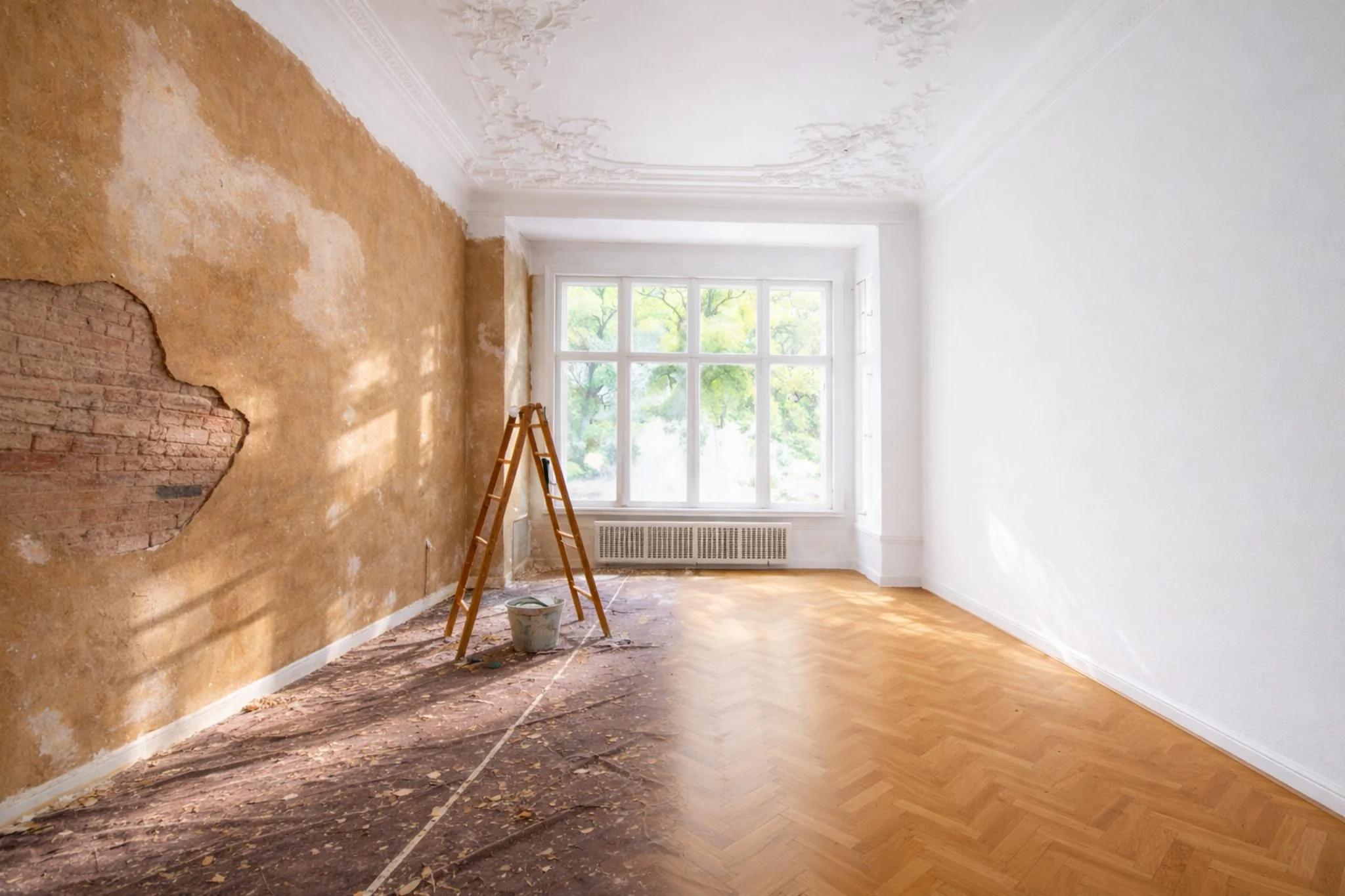
The Eixample is Barcelona's most iconic residential district — and one of the most complex to renovate. Its characteristic illa blocks, Modernista buildings, and century-old apartment layouts present specific technical and regulatory challenges that differ significantly from other parts of the city.
This article explains what property owners should expect when undertaking a renovation in the Eixample, from heritage rules to typical costs and timelines.
What makes the Eixample different
The Eixample was built predominantly between the late 19th and early 20th centuries. Most buildings in the district were constructed under the Cerdà urban plan and share common architectural features: load-bearing walls, vaulted tile ceilings (volta catalana), ceramic mosaic floors, and ornate façades.
Many of these buildings are protected at various levels by Barcelona's heritage department (Patrimoni). This protection can affect:
- Interior structural interventions
- Window and balcony modifications
- Restoration of original decorative elements
- Façade works
Even apartments without direct heritage listing may be in buildings with partial protection, which still triggers additional approval requirements.
Heritage protection levels in the Eixample
Barcelona classifies buildings under four protection levels (A through D). In the Eixample, level C and D protections are most common, and they typically require:
- Preservation of certain interior elements (mosaic floors, vaulted ceilings, original carpentry)
- Approval from the Heritage Department before demolition or modification
- Documentation of existing conditions before work begins
Working with architects who have direct experience with Barcelona's Patrimoni process significantly reduces delays.
Typical renovation challenges in Eixample apartments
Load-bearing walls and structural constraints
Unlike more recent constructions, Eixample apartments often have load-bearing walls where modern apartments would have partitions. This limits layout flexibility and adds cost when redistribution is desired.
Any structural intervention requires a licensed architect, a detailed technical project, and a Major Works permit (Llicència d'Obres Majors).
Outdated installations
Many Eixample apartments — especially those built before the 1960s — have electrical and plumbing systems that need full replacement. Knob-and-tube wiring and original lead or galvanized plumbing are still found in unrenovated units and cannot legally remain in a fully renovated property.
Interior heights and irregular layouts
The generous ceiling heights typical of Eixample apartments (3.2m to 4m+) are an asset, but also add complexity to electrical routing, HVAC installation, and plastering. Irregular room proportions and non-standard dimensions often require custom carpentry solutions.
Permit requirements for Eixample renovations
As with all Barcelona renovations, the permit category depends on the scope:
- Cosmetic works (painting, flooring, kitchen cabinets without moving plumbing): Assabentat d'Obres — no architectural project required
- Layout changes without structural intervention: Comunicat d'Obres — requires a signed technical project
- Structural works or façade modifications: Llicència d'Obres Majors — full architectural project required, approval timeline 3 to 6+ months
In heritage-protected buildings, even a Comunicat may require a Heritage review, which adds time to the process.
Typical costs for Eixample apartments
Renovating in the Eixample is generally at the higher end of Barcelona's cost range due to technical complexity and heritage considerations:
- Standard renovation: €1,200 – €1,600 per m²
- High-quality renovation with structural works: €1,800 – €2,500+ per m²
These ranges assume proper permitting, licensed professionals, and compliant disposal of construction waste. Budget an additional 10–15% contingency for buildings that have not been recently renovated.
Timeline expectations
A full renovation of an Eixample apartment typically takes:
- 2 to 4 weeks for initial assessment and scope definition
- 2 to 6 weeks for design and technical documentation
- 1 to 6 months for permit approval (depending on classification)
- 3 to 6 months for construction
Total elapsed time from first meeting to handover is commonly 9 to 14 months for projects requiring Major Works permits in heritage buildings.
Practical advice for property owners
- Commission a heritage assessment before committing to a layout plan
- Budget for permit costs and professional fees from the start
- Avoid committing to move-in dates until permits are approved
- Document original conditions thoroughly — it protects you legally and helps with permit submissions
- Work with a renovation team that has direct Eixample experience
Conclusion
Renovating in the Eixample offers the opportunity to restore some of Barcelona's most beautiful residential architecture. Done correctly, it also represents a strong long-term investment. The key is approaching the project with realistic expectations, proper planning, and professionals who understand the specific demands of the district.