



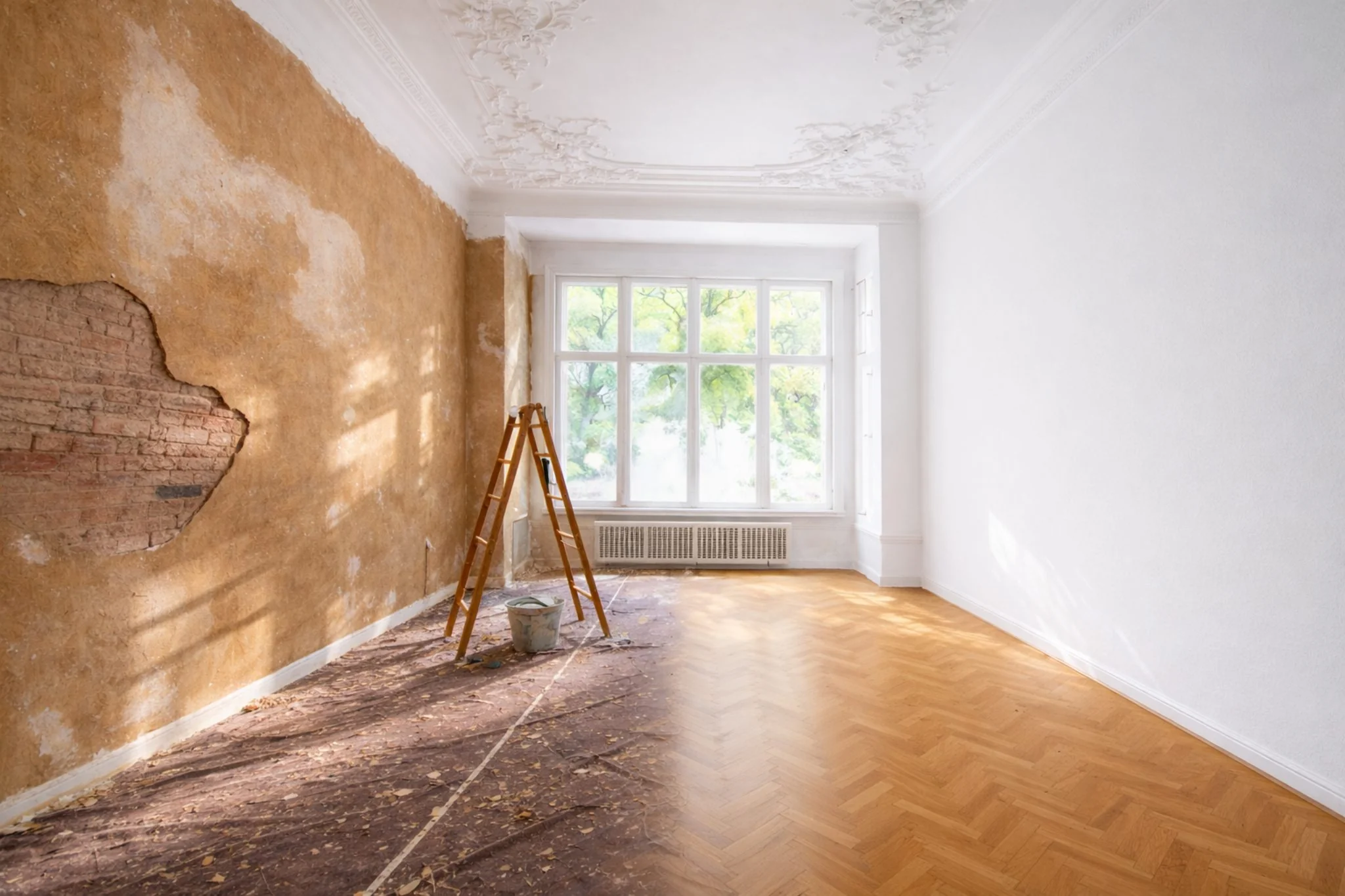
Not all renovation investments in Barcelona generate the same return. Location, property type, buyer profile, and renovation scope all affect whether a project delivers strong value uplift or simply costs money without proportional payback.
This article provides a practical framework for thinking about renovation ROI in Barcelona, with specific considerations by neighbourhood and project type.
How renovation ROI works in Barcelona
Renovation ROI in real estate is typically measured as the increase in property value or rental yield relative to the cost of the renovation. In practice, two projects with identical renovation costs can produce very different returns depending on:
- The starting condition and price of the property
- The neighbourhood's price ceiling and buyer demand
- The type of renovation carried out
- Market conditions at the time of resale or rental
Barcelona's residential market is highly segmented. A renovation approach that makes sense in Sant Gervasi may be inappropriate in Poblenou, and vice versa.
Neighbourhoods with strong renovation ROI potential
Eixample (left and right)
The Eixample consistently offers strong renovation ROI for classic apartment stock. Original layout flats with outdated finishes and unrenovated installations can achieve significant value uplifts when brought to contemporary standards.
The neighbourhood's deep buyer pool — including international buyers, local professionals, and long-term renters — supports premium pricing for well-executed renovations. Typical value uplift on a full renovation: 15 to 25%.
Gràcia
Gràcia attracts a broad buyer profile including young professionals, remote workers, and design-conscious buyers. Properties here benefit strongly from kitchen and bathroom upgrades and layout optimisation. The neighbourhood's price ceiling is lower than the Eixample, so over-investment in luxury finishes can erode returns.
Poble Sec and Sant Antoni
Both areas have seen sustained price appreciation over recent years and continue to attract buyers seeking central, well-connected locations at more accessible prices than the Eixample. Renovation ROI is strong for well-planned full renovations, particularly in buildings with community approval for structural works.
Poblenou and 22@
Poblenou appeals strongly to international buyers and the tech-adjacent professional market. Loft conversions, open-plan layouts, and industrial-modern finishes perform particularly well here. Properties near the beach or the 22@ district command a significant premium when renovated to a high standard.
Sarrià and Sant Gervasi
These upper districts attract family buyers willing to pay for space, quality, and quiet. Renovation ROI here is driven by functionality (adding bedrooms, improving family room layouts, upgrading outdoor spaces) rather than design statement. Budget discipline matters: buyers in this segment are price-aware.
Project types by ROI profile
Layout optimisation
Consistently the highest ROI renovation type across all Barcelona neighbourhoods. Removing unnecessary corridors, opening kitchen-living connections, and improving bedroom suite arrangements can increase perceived value more cost-effectively than any finish upgrade.
Full electrical and plumbing renewal
High ROI in older stock because it de-risks the property for buyers and mortgage lenders. Not visible but critical for valuation and transaction speed.
Kitchen renovation
Strong ROI when executed with market-appropriate materials. Mid-range integrated kitchens outperform ultra-luxury kitchens in most segments. The kitchen is typically the single room buyers weigh most heavily.
Bathroom renovation
Solid ROI, especially when converting bathtubs to walk-in showers and upgrading to large-format tiles. Adding a second bathroom delivers strong ROI in larger apartments where this was previously missing.
Façade and exterior works
ROI is community-level rather than individual. Façade works benefit all owners in a building but are complex to coordinate and expensive to fund individually. They are more relevant for community renovation projects than single-apartment investments.
What reduces renovation ROI
- Over-specification for the neighbourhood's price ceiling
- Highly personalised design choices that reduce buyer pool
- Non-compliant works that create legal risk on resale
- Poor project management leading to cost overruns
- Renovating without understanding the specific buyer profile of the area
Conclusion
Renovation ROI in Barcelona is real and achievable, but it is not automatic. It requires a disciplined approach: right neighbourhood, right project scope, right quality level, and clean legal execution. Owners who treat renovation as a strategic investment rather than a design exercise consistently outperform those who do not.